Beyond a Conference
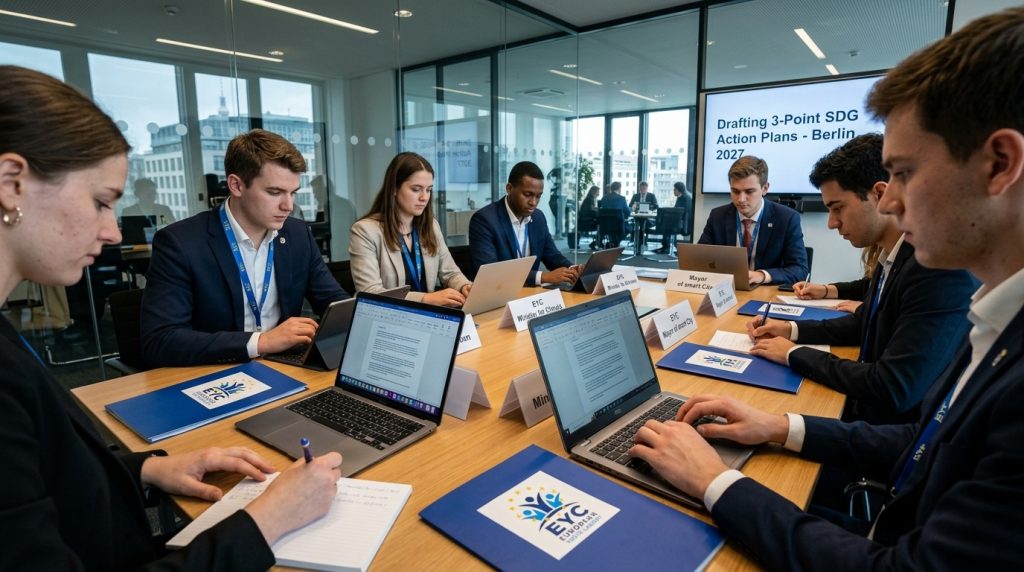
Young Europeans are increasingly disillusioned with traditional, lecture-style events. They do not need more theory; they need practice. The European Youth Cabinet (EYC) is not a conference. It abandons traditional panels and presentations in favour of a fully participatory and real experience. It is a three-day immersive, gamified governance simulation that transforms 200 young leaders (aged 18-35) from passive listeners into active decision-makers.
Participants will literally build and operate a simulated government from the ground up, starting with networking, debates, campaigns, negotiations, live in-hall elections and culminating in the high-stakes management of a sudden, simulated European crisis. This is where the future of Europe is not just discussed; it is actively governed.
EYC offers a fully practical experience where 200 participants elect a President of the Assembly (along with two Vice-Presidents running as a unified electoral ticket) and 17 Ministers (alongside two deputies for each minister). These Ministers do not oversee traditional portfolios; they lead modern, future-oriented ministries directly mapped to the 17 Sustainable Development Goals (SDGs), from the Ministry of No Poverty and Economic Dignity to Ministry of Global Partnerships and Youth Diplomacy.
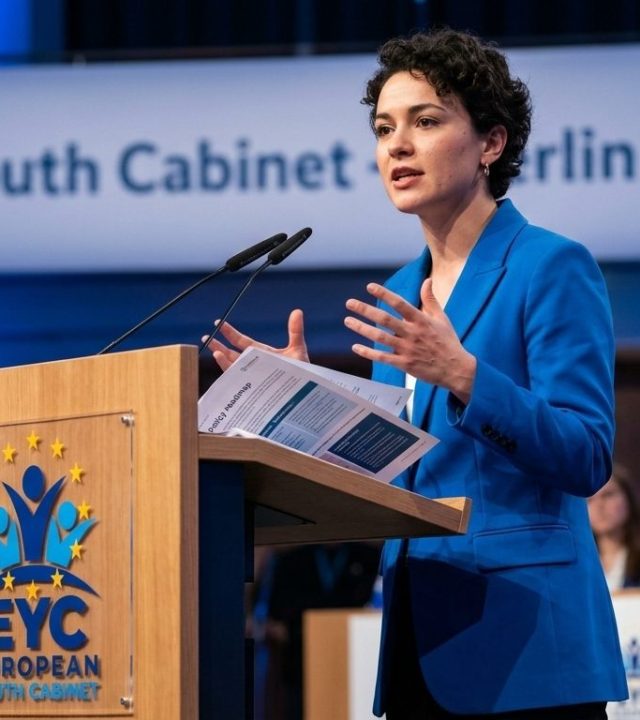
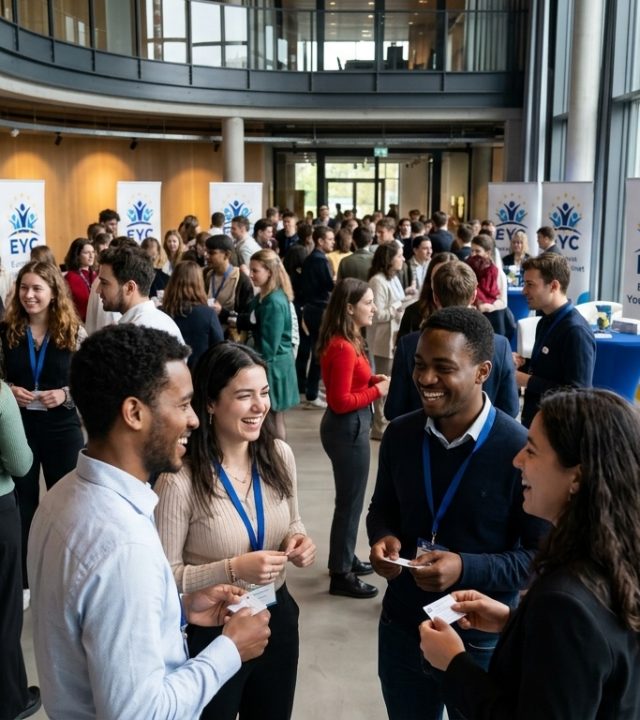
Democracy starts on Day 1
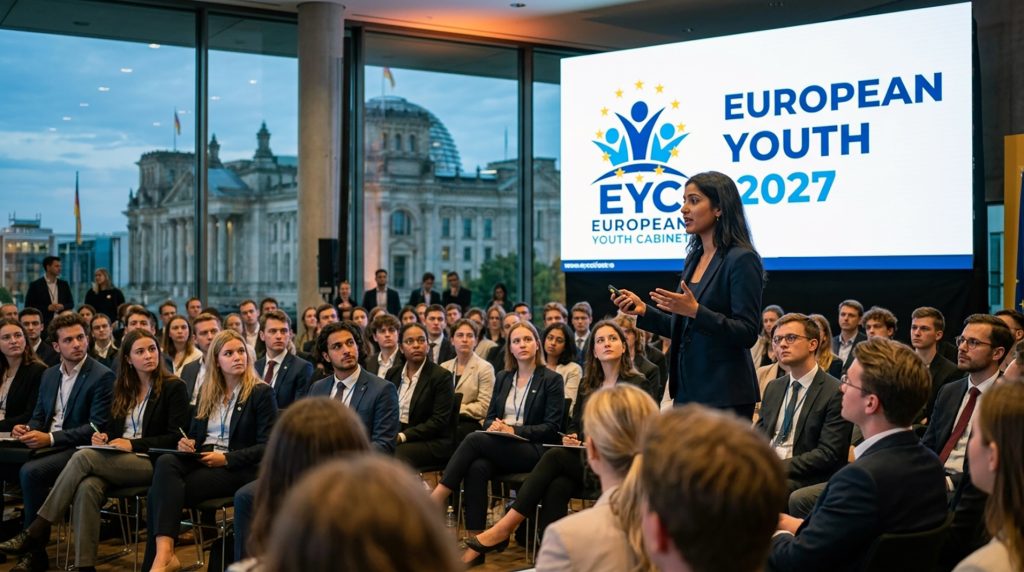
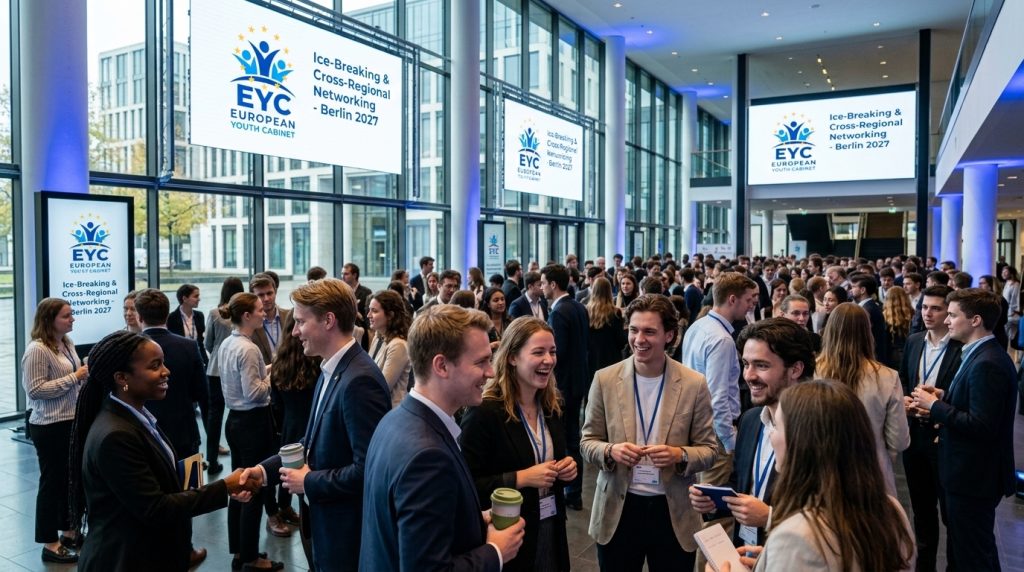
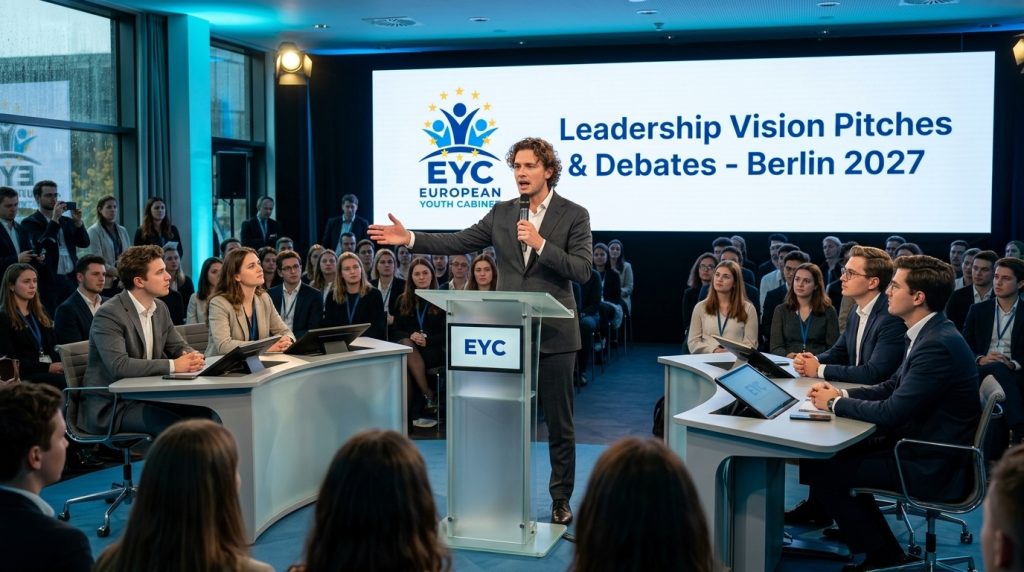
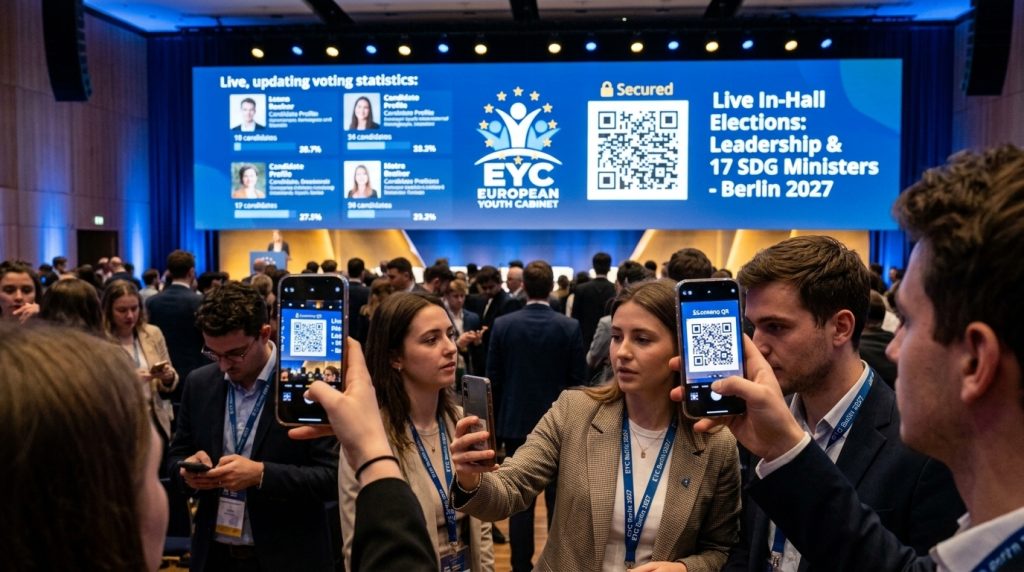
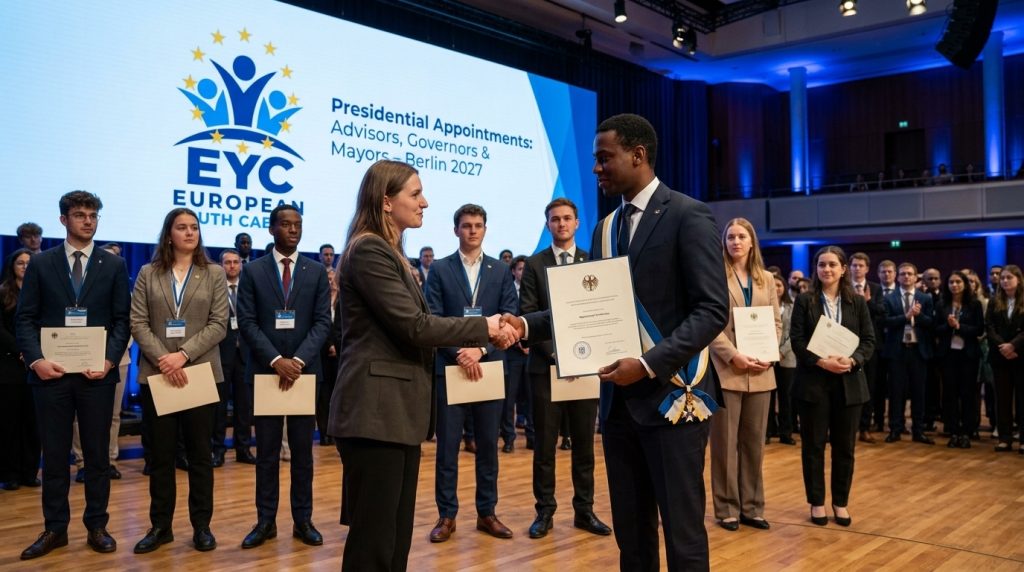
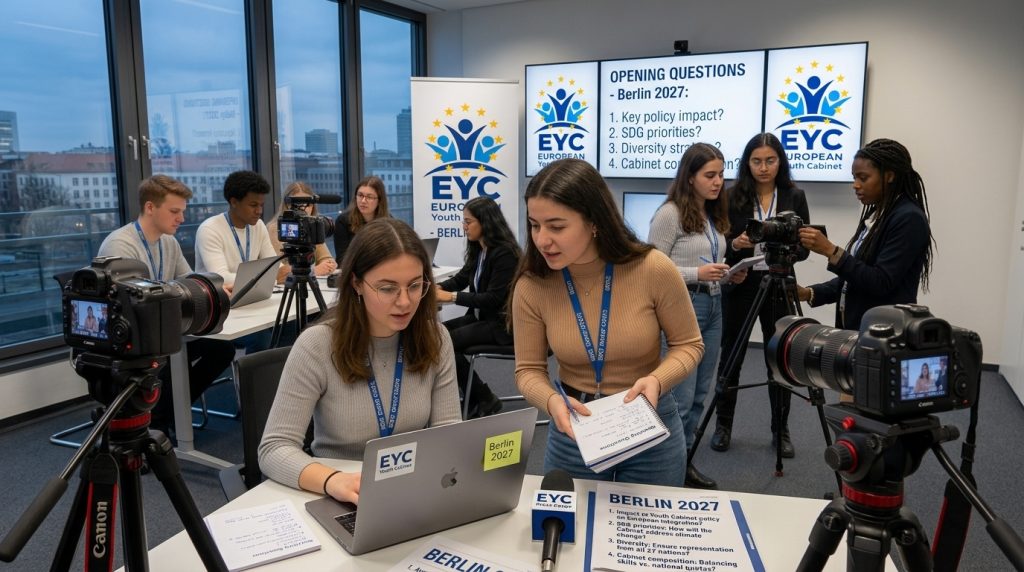
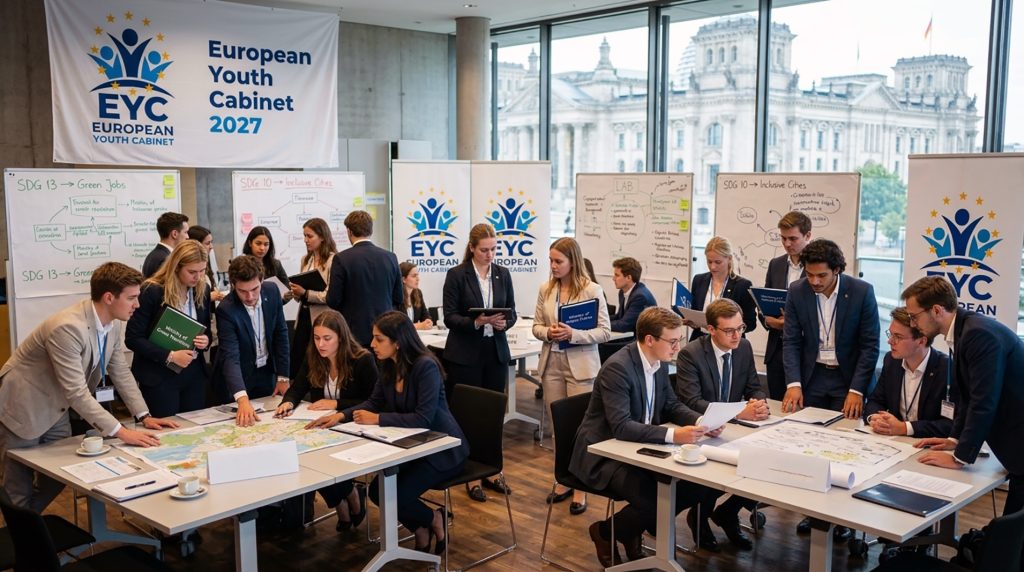
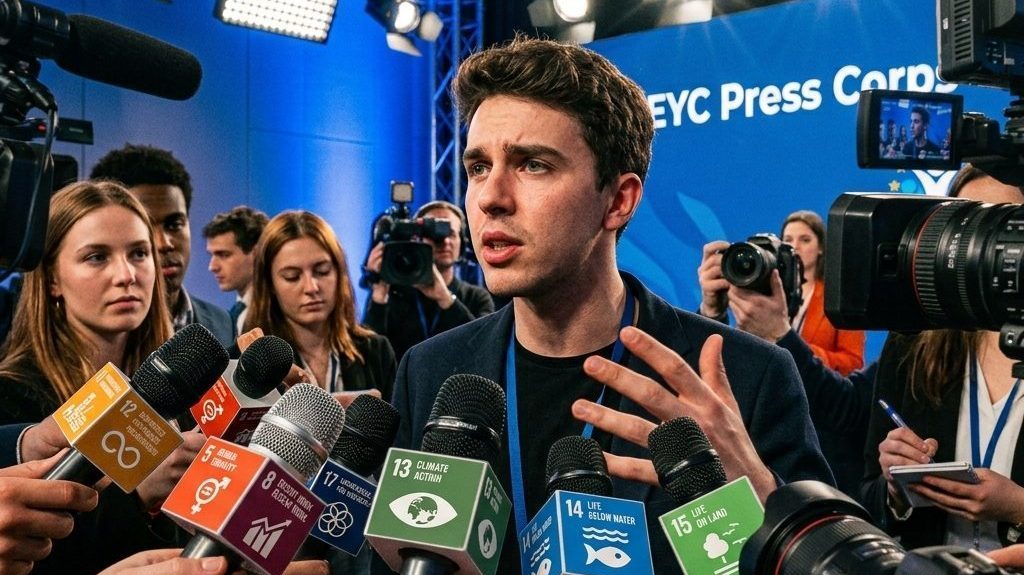
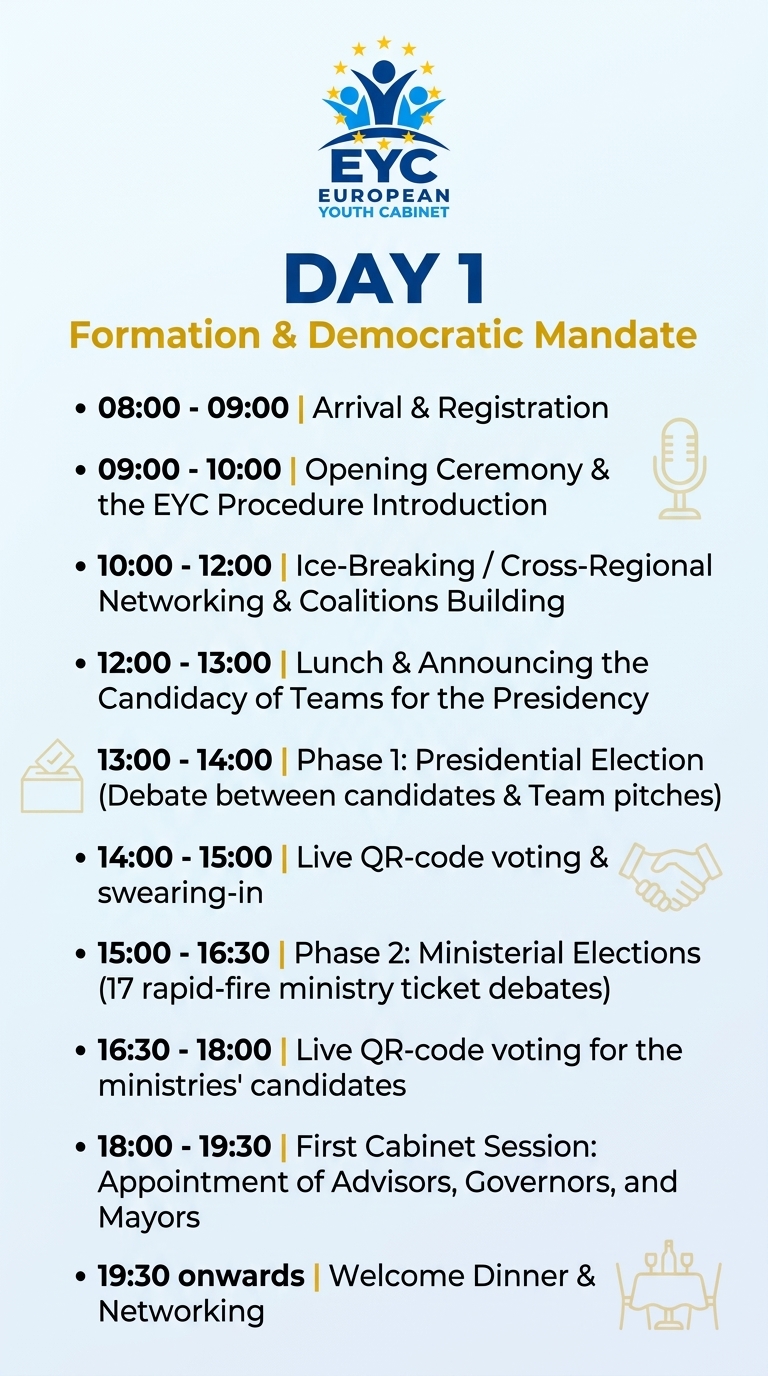
After a dynamic 3-hour ice-breaking and networking session, candidates for the Presidential ticket and the 17 Ministries attend debates and election campaigns. All 200 participants then vote live using a secure digital platform. The winning presidential ticket and ministers are sworn in immediately. Then organise the first EYC cabinet and discuss the most relevant topics of Europe. Day 2 is the heart of the EYC. Just as ministries finalise their policies, a sudden, complex crisis is simulated. Ministers must negotiate, reallocate limited budgets, and form coalitions under extreme time pressure. Adding to the intensity, 17 participants with journalism backgrounds act as the “SDG Press Corps.” The journalists hold the president and ministers accountable through press conferences. They wield custom microphones branded with the 17 SDG logos, a powerful visual reminder that every decision must be measured against global sustainability goals.
Through this unique initiative, EYC empowers young people to practice democracy, master crisis leadership, and forge a tangible legacy, all while experiencing the thrill of governance firsthand.
The EYC Structure
The European Youth Cabinet creates a governance model that reflects the complexity, urgency, and interconnectedness of the 21st century. It is a fully operational, democratically elected simulated government where every single participant holds a specific role, wields real responsibility, and experiences the weight of decision-making. Below is the complete organisational structure that assigns a clear mandate to all 200 participants.
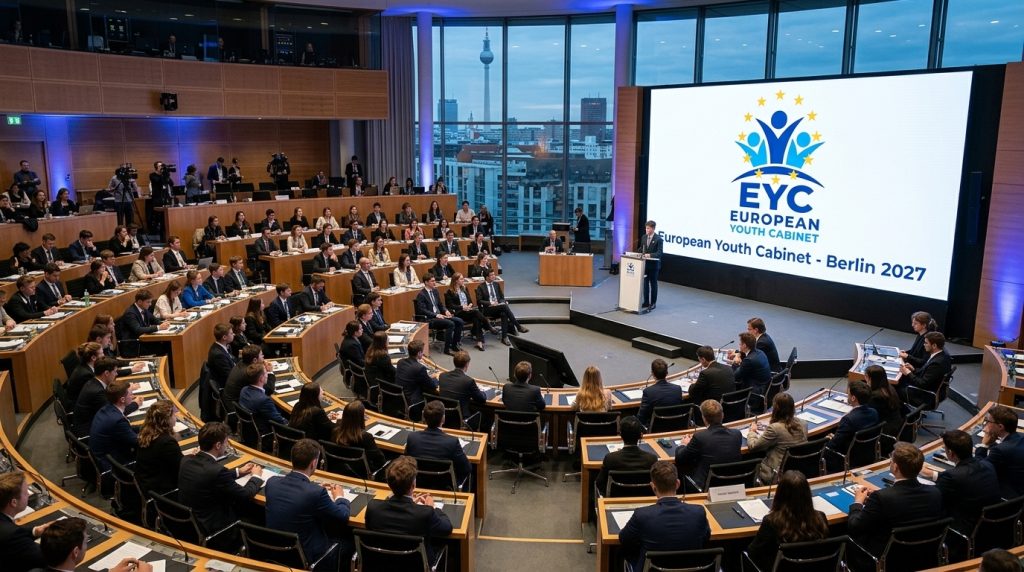
Executive Leadership
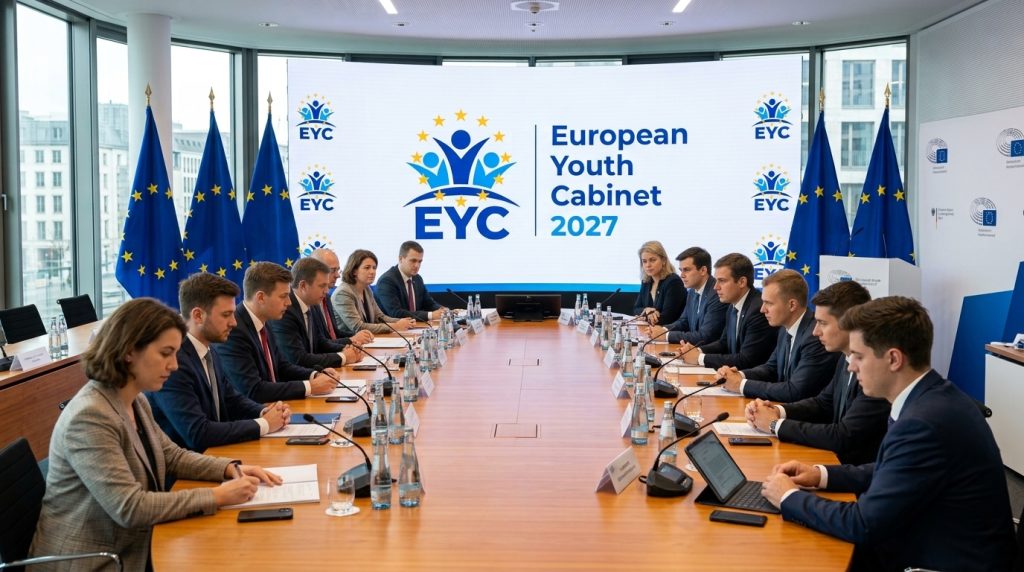
At the top of the EYC sits the President of the Assembly, elected not alone, but as part of a unified electoral ticket that includes two Vice-Presidents. This three-person leadership team is chosen through a live, in-hall democratic vote by all 200 participants on Day 1. One President of the Assembly: Leads the cabinet, convenes emergency councils, and represents the EYC. Two Vice-Presidents: One oversees domestic policy clusters; the other oversees international and SDG clusters. The President convenes regular cabinet sessions where all 17 ministers present updates, propose policies, and negotiate cross-ministerial collaboration. These meetings are fast-paced, structured, and results-oriented.
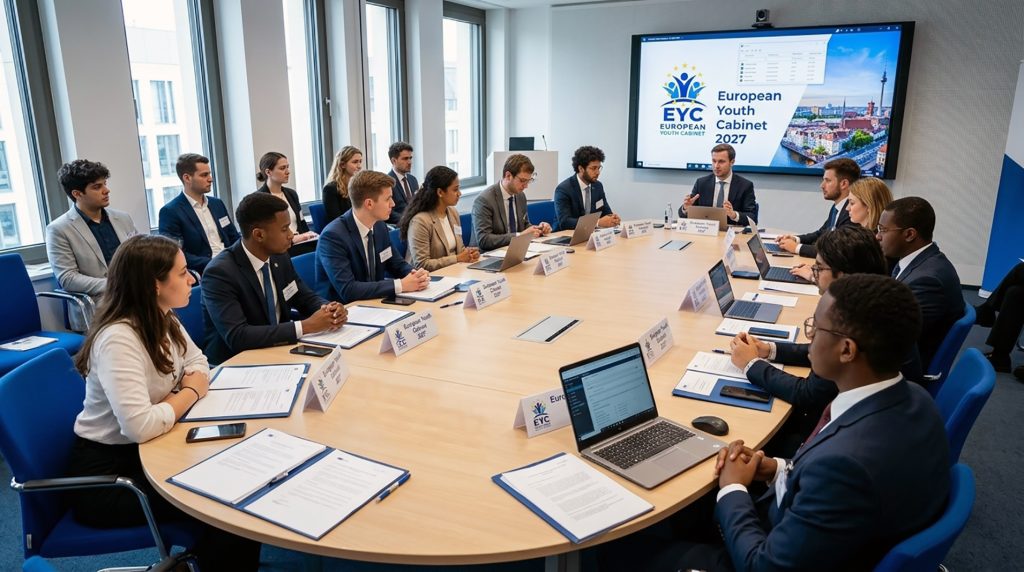
The Cabinet
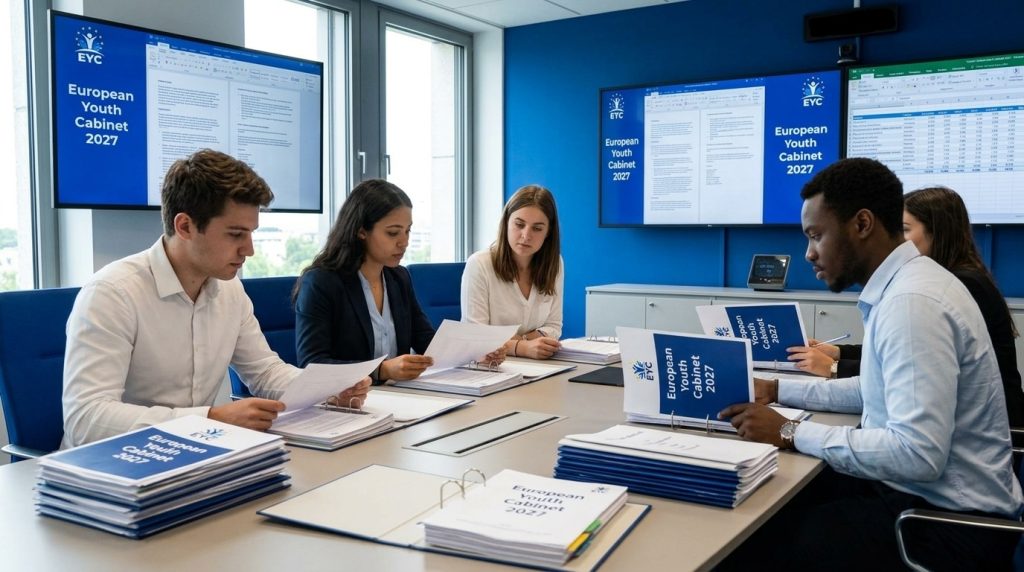
The 17 SDGs are the absolute foundation of the entire program. Each of the 17 ministries in the EYC is directly and exclusively mapped to one UN Sustainable Development Goal, blending official UN terminology with modern, action-oriented European policy language. Each ministry is led by a Minister, who is also democratically elected as a team of three (Minister and two deputies) by the assembly. The Minister then selects a team of Advisors and Policy Officers from the remaining participants, creating a working team of approximately 6-7 people per ministry. Here is the ministries list:
- Ministry of No Poverty and Economic Dignity (SDG 1: No Poverty)
- Ministry of Zero Hunger and Food Security (SDG 2: Zero Hunger)
- Ministry of Public Health and Wellbeing (SDG 3: Good Health and Well-being)
- Ministry of Quality Education and Lifelong Learning (SDG 4: Quality Education)
- Ministry of Gender Equality and Women’s Leadership (SDG 5: Gender Equality)
- Ministry of Clean Water and Sanitation (SDG 6: Clean Water and Sanitation)
- Ministry of Affordable and Clean Energy (SDG 7: Affordable and Clean Energy)
- Ministry of Decent Work and Economic Growth (SDG 8: Decent Work and Economic Growth)
- Ministry of Industry, Innovation, and Infrastructure (SDG 9: Industry, Innovation and Infrastructure)
- Ministry of Reduced Inequalities and Social Solidarity (SDG 10: Reduced Inequalities)
- Ministry of Sustainable Cities and Communities (SDG 11: Sustainable Cities and Communities)
- Ministry of Responsible Consumption and Circular Economy (SDG 12: Responsible Consumption and Production)
- Ministry of Climate Action and Environmental Justice (SDG 13: Climate Action)
- Ministry of Life Below Water and Ocean Protection (SDG 14: Life Below Water)
- Ministry of Life on Land and Biodiversity (SDG 15: Life on Land)
- Ministry of Peace, Justice, and Strong Institutions (SDG 16: Peace, Justice and Strong Institutions)
- Ministry of Global Partnerships and Youth Diplomacy (SDG 17: Partnerships for the Goals)
Each minister is responsible for developing policies, negotiating budgets, and responding to crises related to their specific SDG. When the “Black Swan” crisis hits on Day 2, it will not affect just one ministry; it will create a chain reaction across multiple SDGs, forcing ministers to collaborate, compromise, and find integrated solutions.
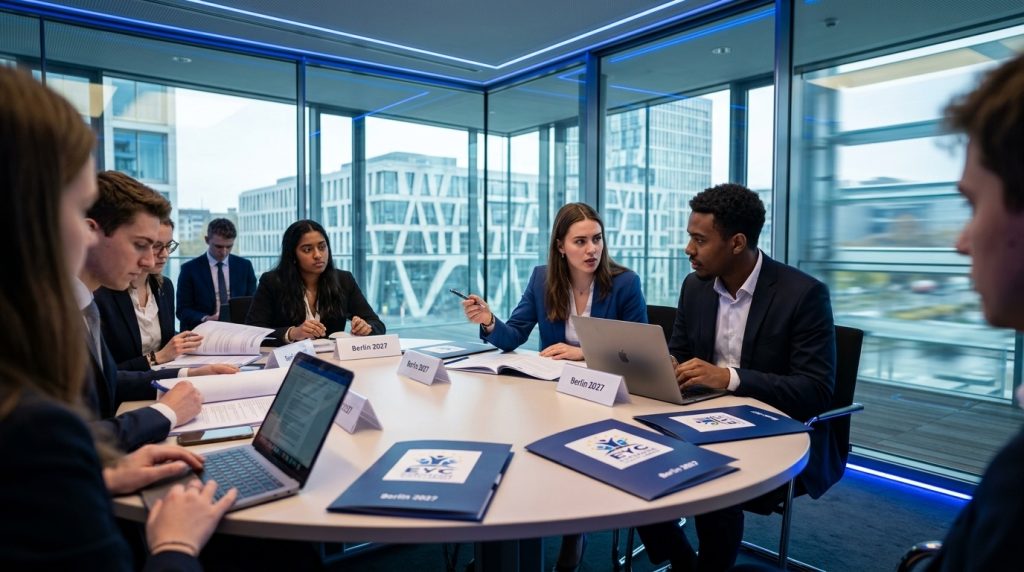
Deputy Ministers
Each minister appoints 2 Deputy Ministers to assist in policy development, budget negotiation, and crisis response. They are a three-of-election-ticket when the minister nominates himself/herself for a ministry.
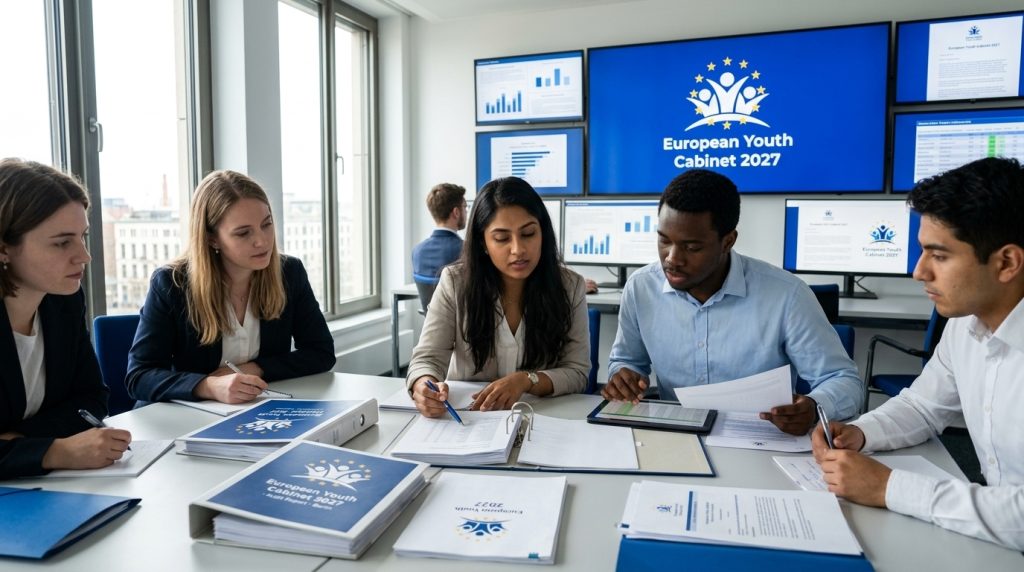
Presidential Advisory Council
Four senior advisors appointed by the President and vice-presidents and directly supporting the President's team: (1) Advisor on Domestic Policy & Communications (2) Advisor on EU Diplomacy & Foreign Affairs (3) Advisor on Economy & Finance (4) Advisor on Security & Crisis Resilience
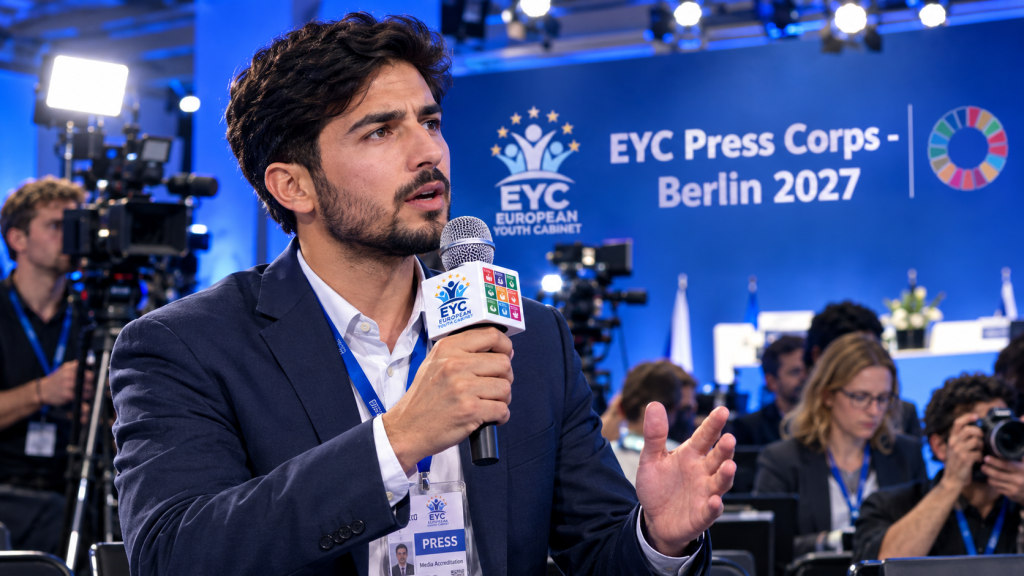
The SDG Press Corps
17 participants with journalism/media backgrounds act as the investigative press. Each wields a custom microphone branded with one of the 17 SDG logos, grilling ministers in live press conferences and demanding real-time accountability. The “EYC Organising & Oversight Commission,” comprising the NTYCO executive team and senior event facilitators, will select and appoint these 17 journalists before the event. The selection procedure is as follows: Phase 1 (Pre-event): In a separate registration form, applicants interested in “Journalist/Reporter” roles submit a CV and a statement of purpose demonstrating their expertise in journalism. Phase 2 (Screening): The NTYCO Organising Commission selects the 17 individuals who possess the strongest journalism profiles and show a commitment to accuracy, impartiality, and transparency. Phase 3 (Introduction on Day 1): On the first day of the event, these 17 individuals are introduced to everyone as “SDGs Journalists.” They have the right to vote, but they cannot nominate themselves for any other position in the EYC.
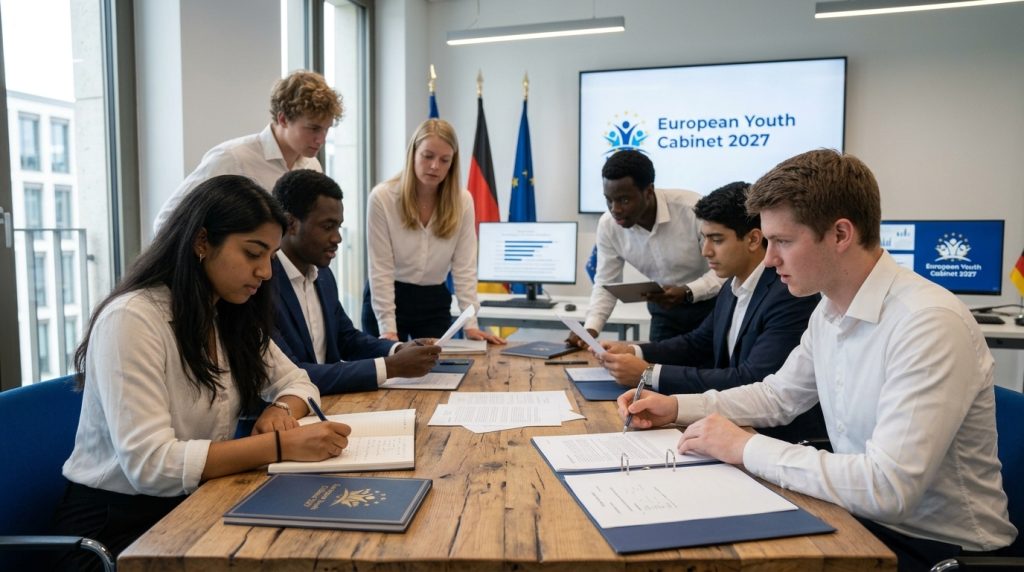
European Regional Governors
Reflecting the 27 member states of the European Union, each Governor, alongside his/her deputy, is responsible for implementing national SDG policies within their symbolic region. They coordinate with relevant ministries and report regional challenges to the central cabinet. They are directly appointed by the President and Vice-Presidents of the Assembly.
Independent Agencies & Commissions
These bodies operate entirely outside the executive branch (the Cabinet). Their sole mandate is to audit, investigate, and hold the ministries accountable, ensuring that all policies align with the SDGs and ethical standards. These 17 individuals will be selected and appointed prior to the event by the “EYC Organising & Oversight Commission,” which comprises the NTYCO executive team and senior event facilitators. The selection procedure is as follows: Phase 1 (Pre-event): In a separate registration form, applicants interested in “oversight and audit” roles are asked to submit a CV and a statement of purpose demonstrating their expertise in fields such as law, environment, economics, or human rights. Phase 2 (Screening): The NTYCO Organising Commission selects the 17 individuals who possess the strongest analytical profiles, demonstrate impartiality, and show a commitment to transparency. Phase 3 (Introduction on Day 1): On the first day of the event, these 17 individuals are introduced to everyone as “independent observers.” They have the right to vote, but they cannot nominate themselves for any other position in the EYC.
Smart City Mayors
27 mayors alongside their deputies representing 27 European Union countries. They translate national policies into urban-level action plans on sustainability, mobility, housing, and inclusion. They are directly appointed by the President and Vice-Presidents of the Assembly.
200 Participants
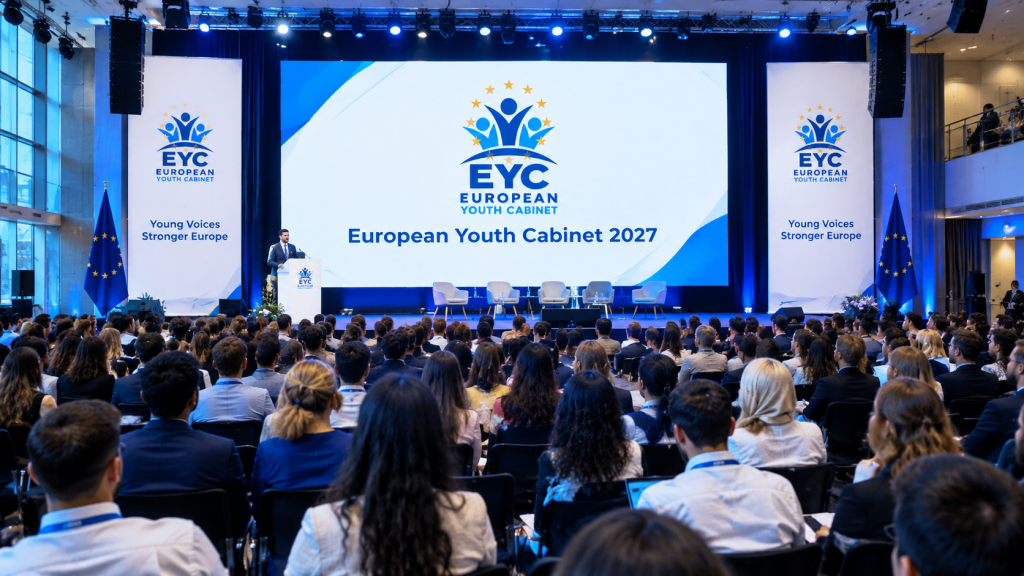
Every single person has a title, a mandate, a voice, a team, and a governance role across the 8 functional tiers.
The Election Procedure
Phase 1: The Presidential Election (The Executive Ticket)
The EYC begins with the election of its highest executive body. To ensure balanced, inclusive, and collaborative leadership, the President of the Assembly does not run alone.
Team Declaration & Campaigning
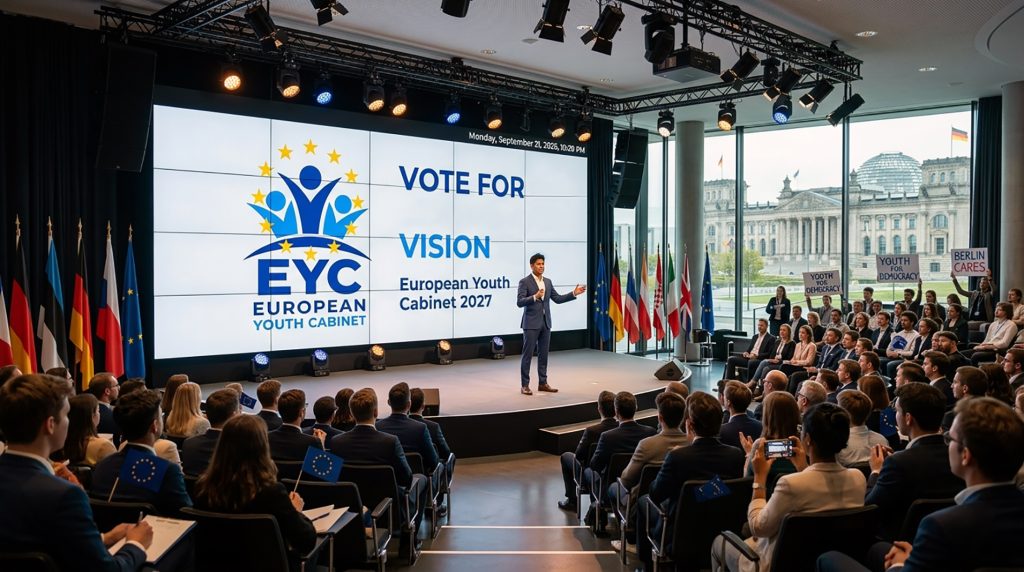
Candidates must form a unified "Executive Ticket" consisting of three members: one candidate for President and two candidates for Vice-President. Before the vote, these tickets declare their teams, launch pre-election campaigns, and use the networking sessions to build alliances and present their overarching vision for the 72-hour government.
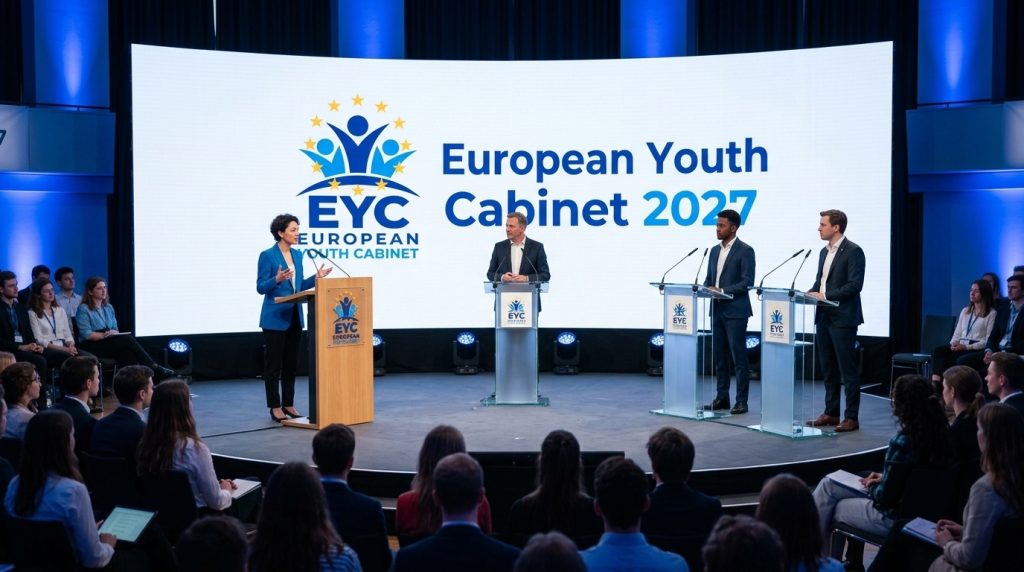
The Presidential Debate
A structured, moderator-led debate takes place on the main stage. The competing executive tickets present their roadmaps, defend their policies, and engage in rigorous debate while the moderator ensures fair play and time management.
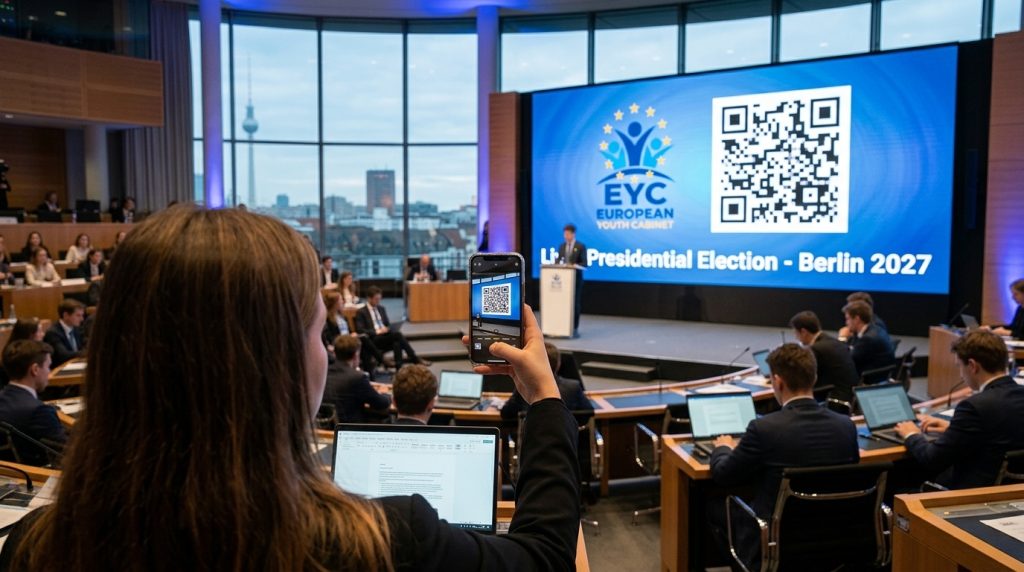
Live Democratic Voting
All 200 participants act as the national electorate. Using a secure, real-time digital voting platform, they scan unique QR codes displayed on large screens alongside the candidates' photos and manifestos. The voting is transparent, instant, and fraud-proof.
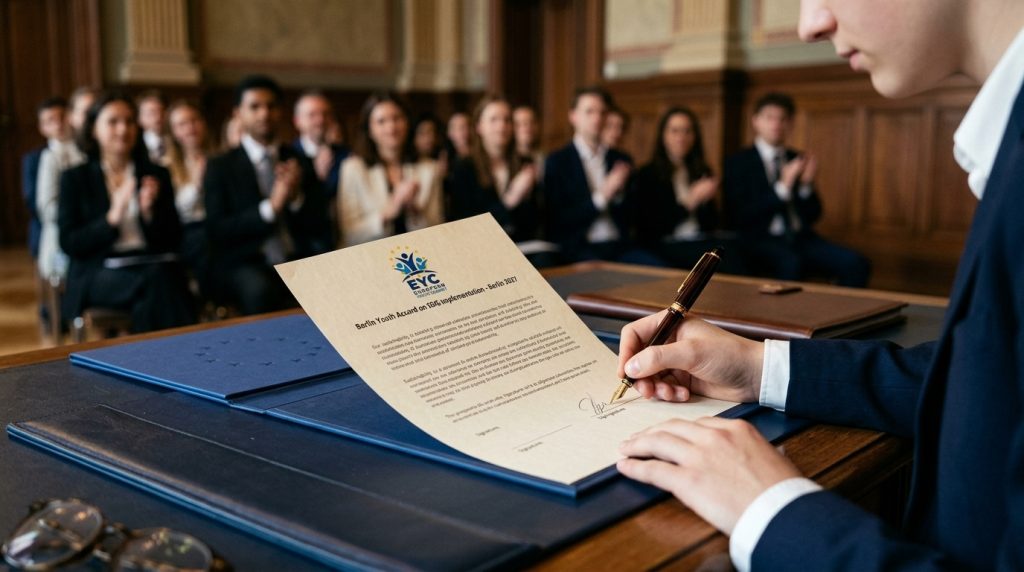
Swearing-In (Oath
The ticket with the most votes is declared the winner on the spot. The new President and two Vice-Presidents are immediately sworn in, officially taking the helm of the EYC to oversee the next phase.
Phase 2: The Ministerial Elections (The 17 SDG Cabinets)
Once the executive leadership is established, the assembly moves to form the cabinet. This phase involves 17 separate elections, one for each of the SDG-aligned ministries.
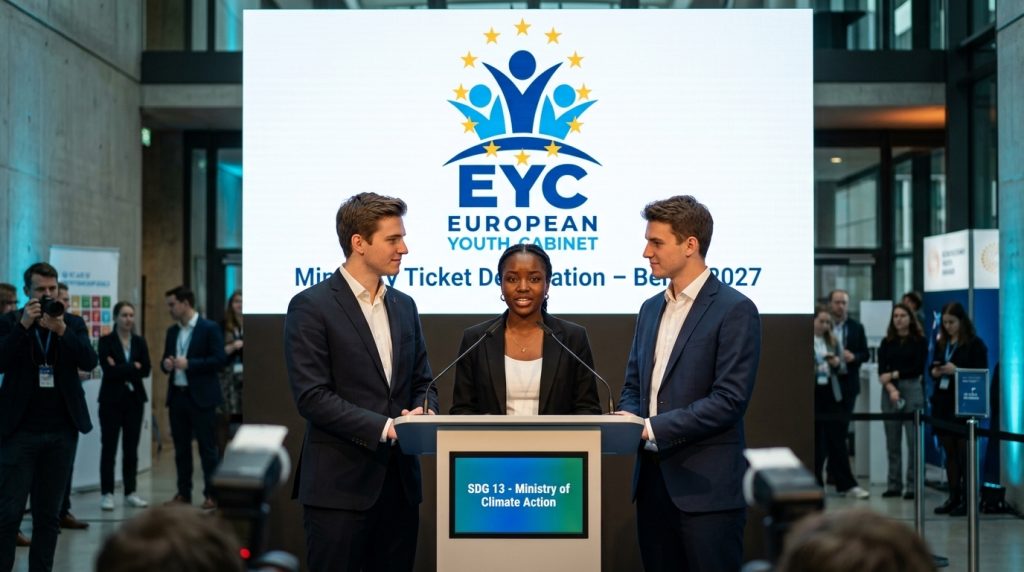
Team Declaration (The Ministry Tickets)
For each of the 17 ministries, candidates must form a “Ministry Ticket” of three people: one candidate for Minister alongside two Deputy Ministers. They declare which specific SDG ministry they are running for (e.g., the Ministry of Climate Action ticket).
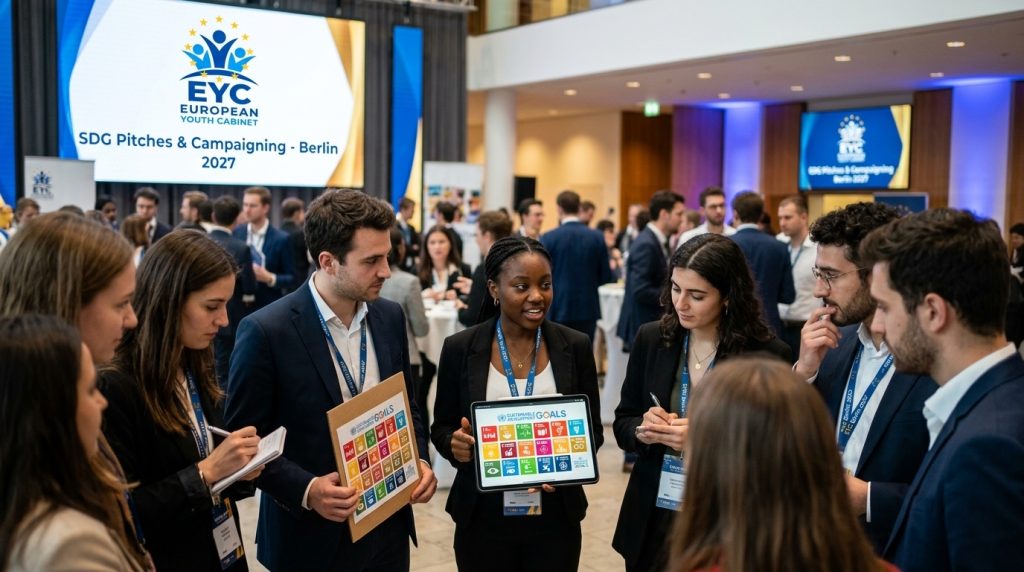
Campaigning & SDG Pitches
These teams network and campaign specifically around their chosen SDG. They must convince the assembly of their expertise, passion, and innovative solutions for that specific global goal.
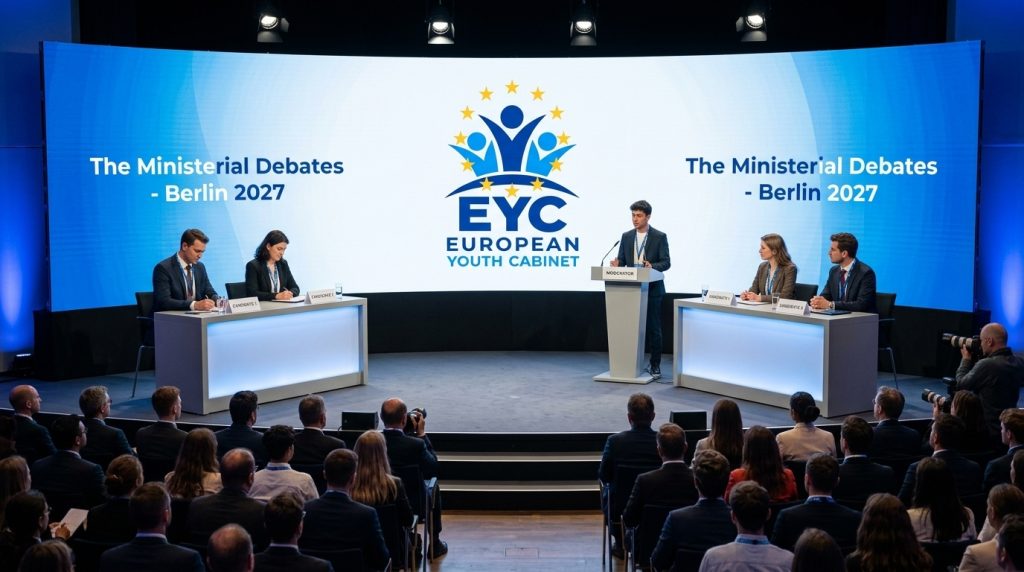
The Ministerial Debates
For each ministry, a rapid-fire, moderator-led debate occurs between the competing tickets. They present their policy proposals and debate the best approaches to tackle their specific SDG challenges, while the entire assembly listens and evaluates.
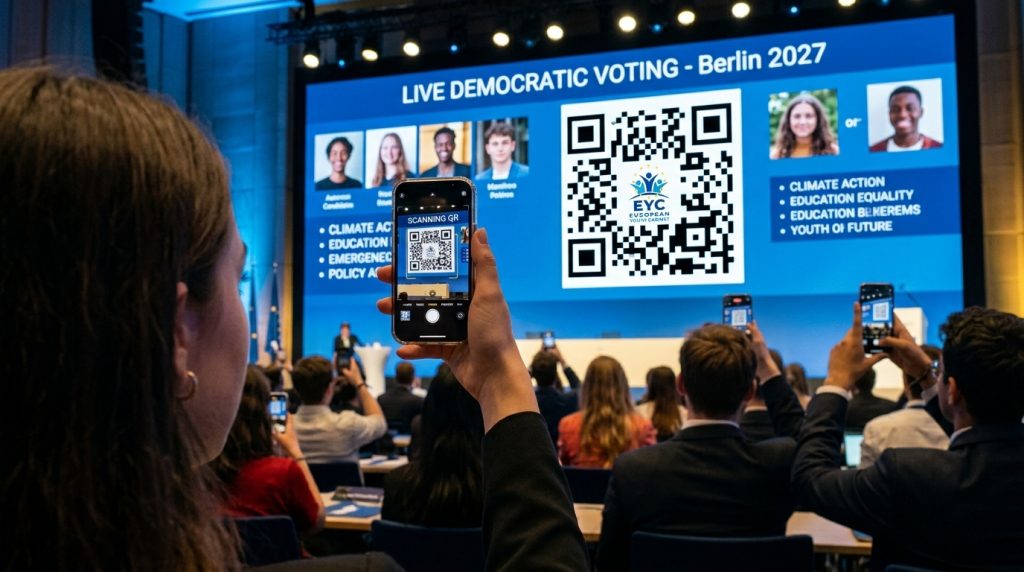
Live Democratic Voting
Once again, all 200 participants hold the power. After the debates for a specific ministry conclude, the entire assembly votes via the secure digital QR code system. The screens display the photos and plans of the competing ministry tickets.
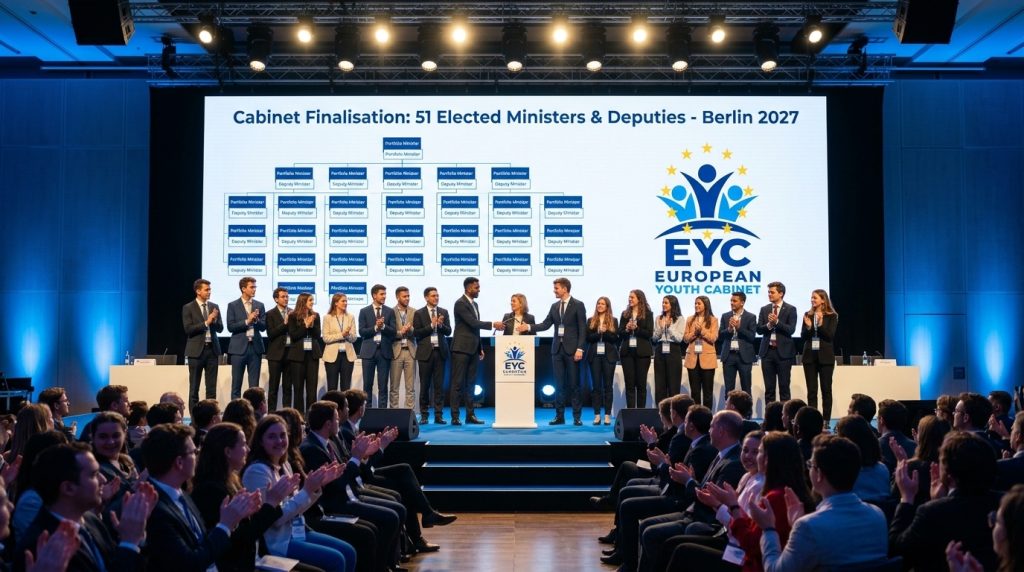
Cabinet Finalisation
The ticket with the most votes wins the ministry and is immediately recognised. This dynamic process is repeated across all 17 SDGs until the entire cabinet of 51 members (17 Ministers + 34 Deputies) is democratically elected by their peers and ready to work alongside the President.
What Everyone Does Across the 72 Hours
Day 1: Formation & Mandate
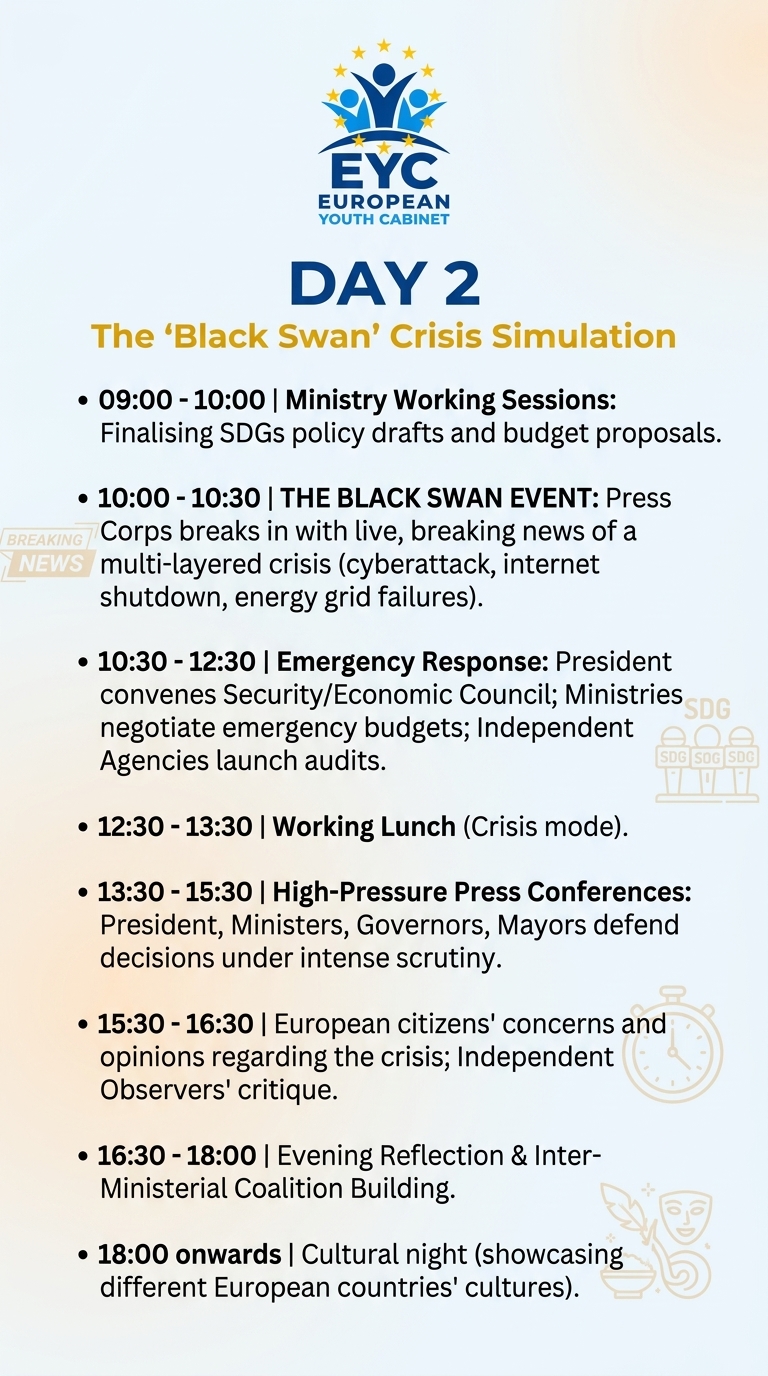
Day 2: The “Black Swan” Crisis Simulation
A sudden, multi-layered crisis is announced (e.g., a simulated cyberattack on energy infrastructure (SDG 7 & 9) will immediately trigger a migration crisis (SDG 10), a health emergency (SDG 3), and a breakdown in urban services (SDG 11)). This news will be announced by the Press Corps as live, breaking news on the stage. The cabinet must work together to solve interconnected problems, just as they would in real governance.
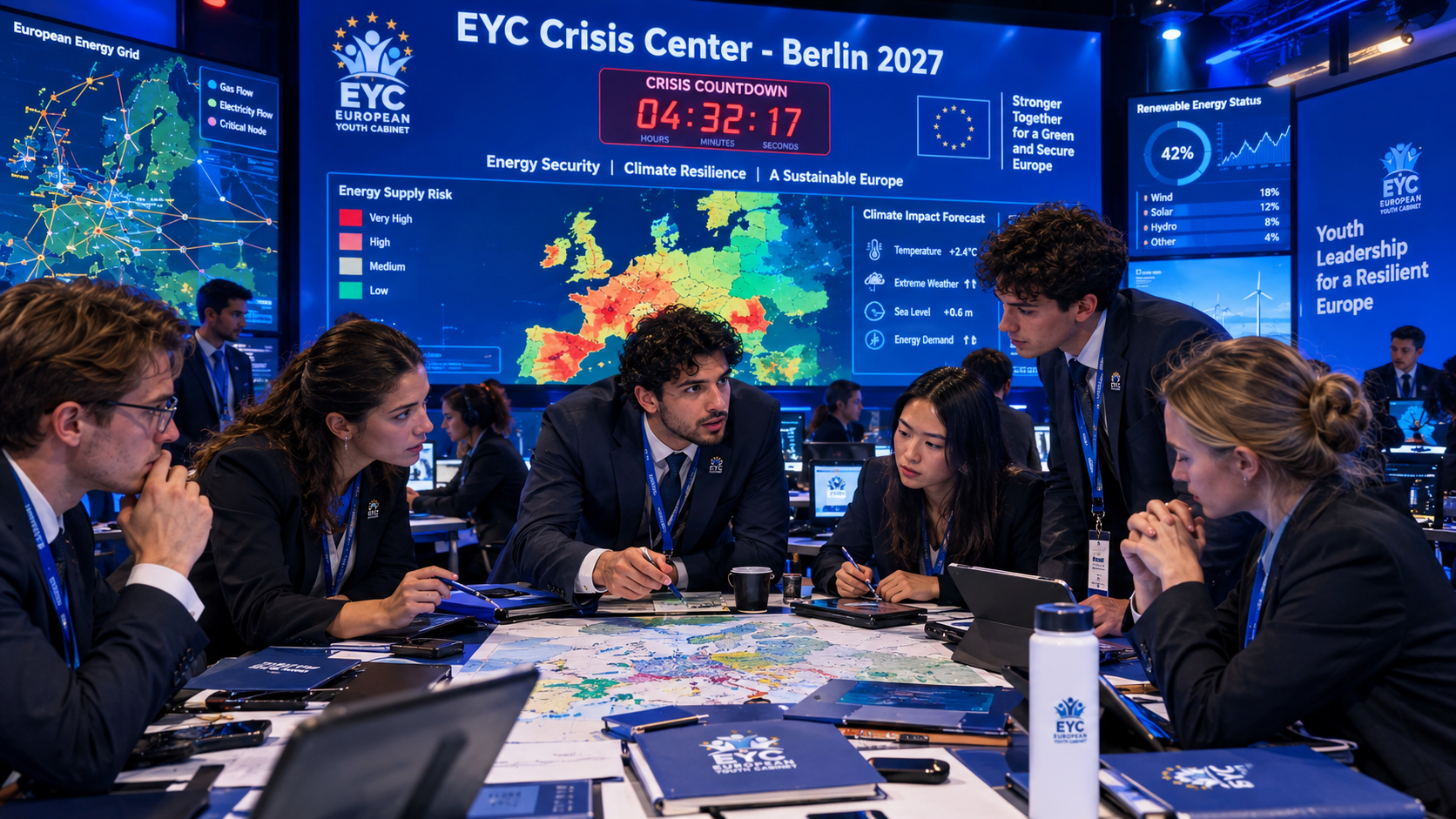
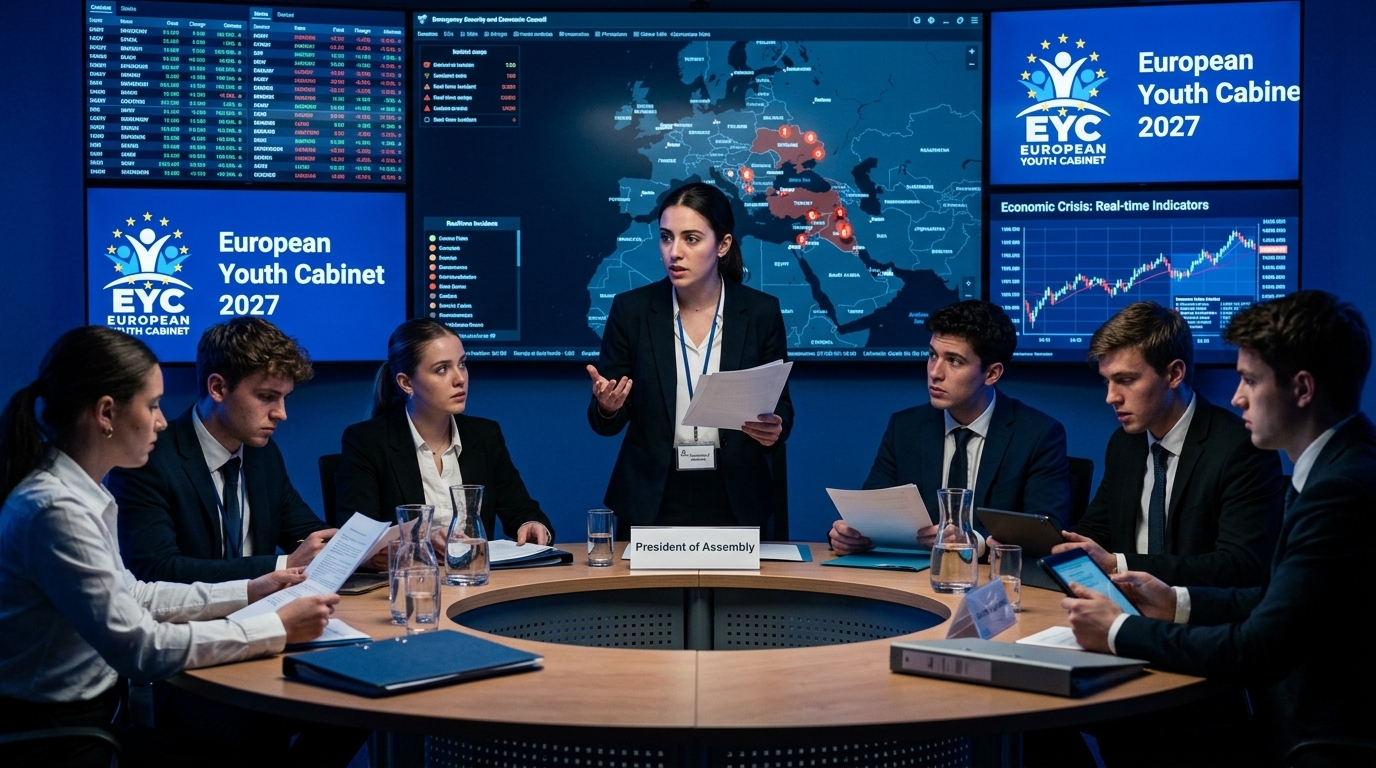
- Every tier activates simultaneously:
- The President convenes an Emergency Security & Economic Council.
- Ministers negotiate emergency budgets and cross-ministerial coalitions.
- Deputy Ministers and Technical Experts draft real-time policy responses.
- Governors and Mayors must adapt national directives to local realities and report bottlenecks.
- Independent Agencies launch emergency audits and publish interim findings.
- The Press Corps conducts live, high-pressure press conferences, challenging ministers on their decisions.
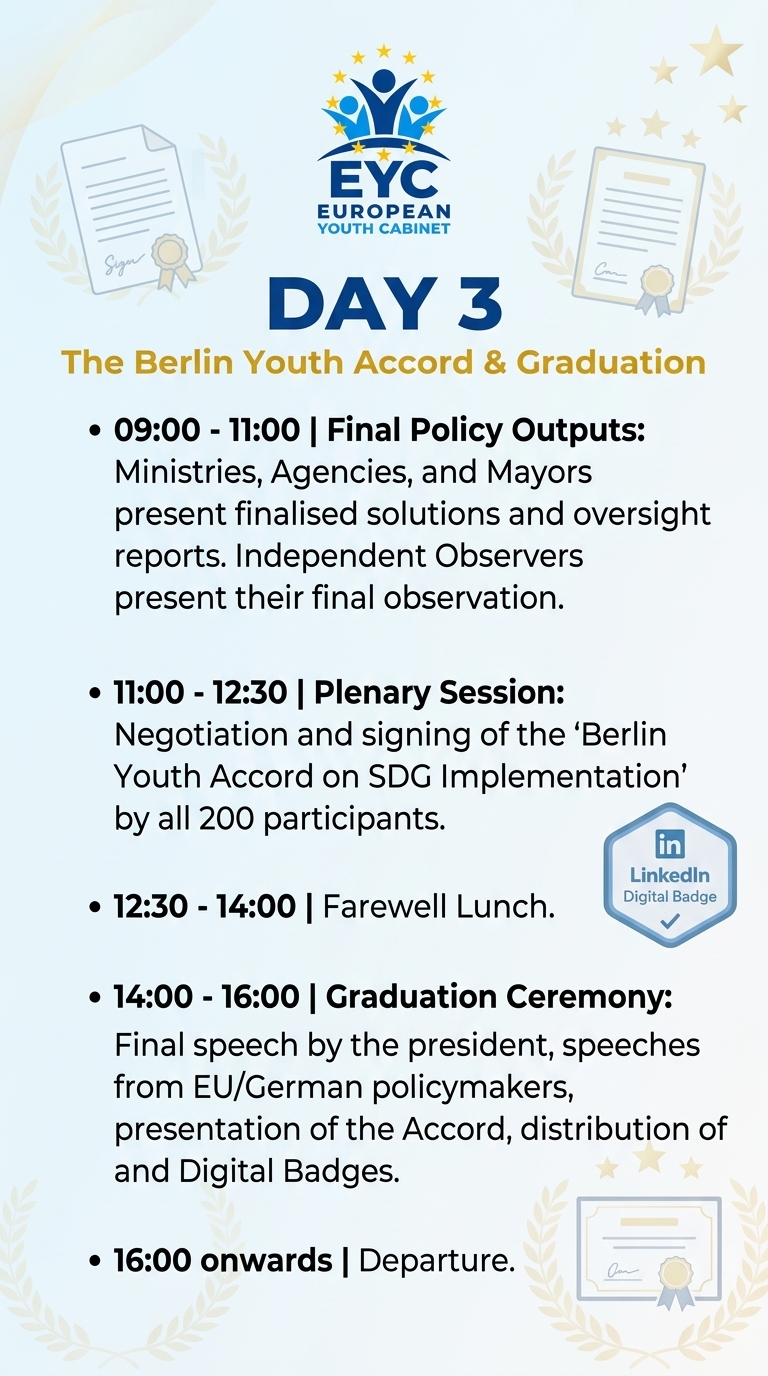
Day 3: The Berlin Youth Accord & Graduation
Each ministry, governorate and mayoralty presents its final policy output.
The Independent Agencies deliver their oversight report.
The Press Corps publishes a final “State of the Cabinet” report.
All 200 participants negotiate and sign the “Berlin Youth Accord on SDGs Implementation,” a real policy document.
The Accord will be formally presented to EU representatives, German policymakers and relevant organisations after the event.
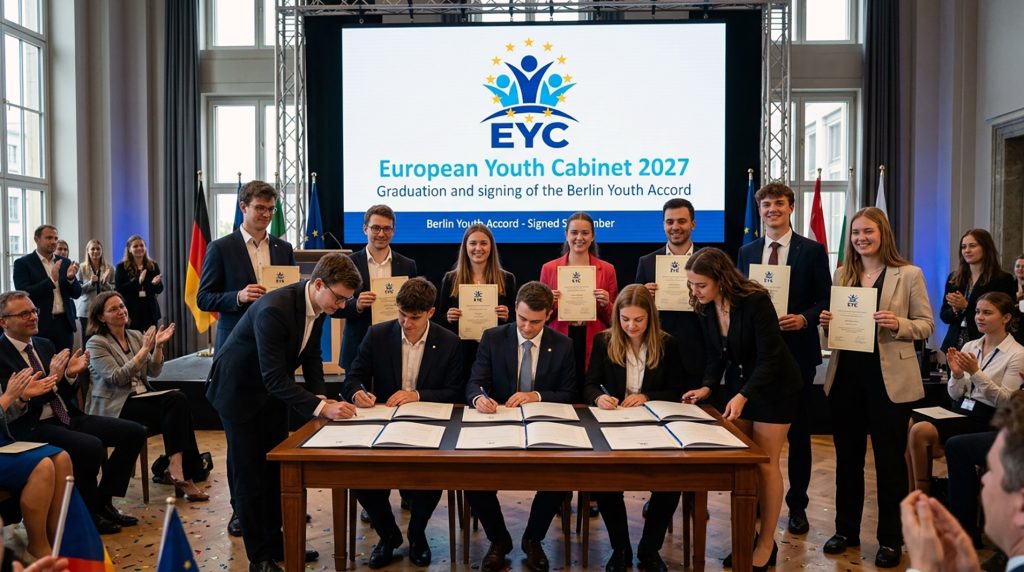
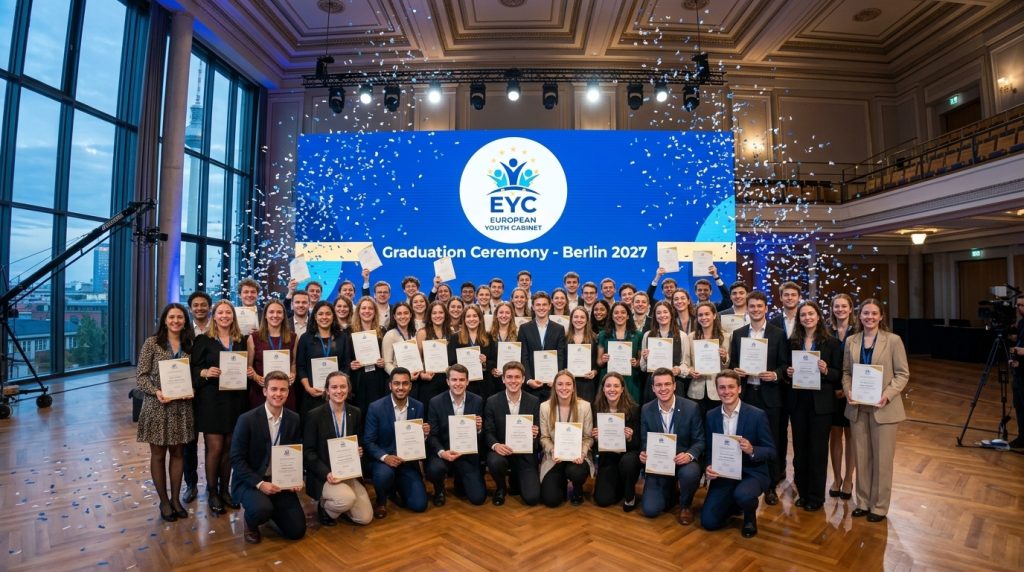
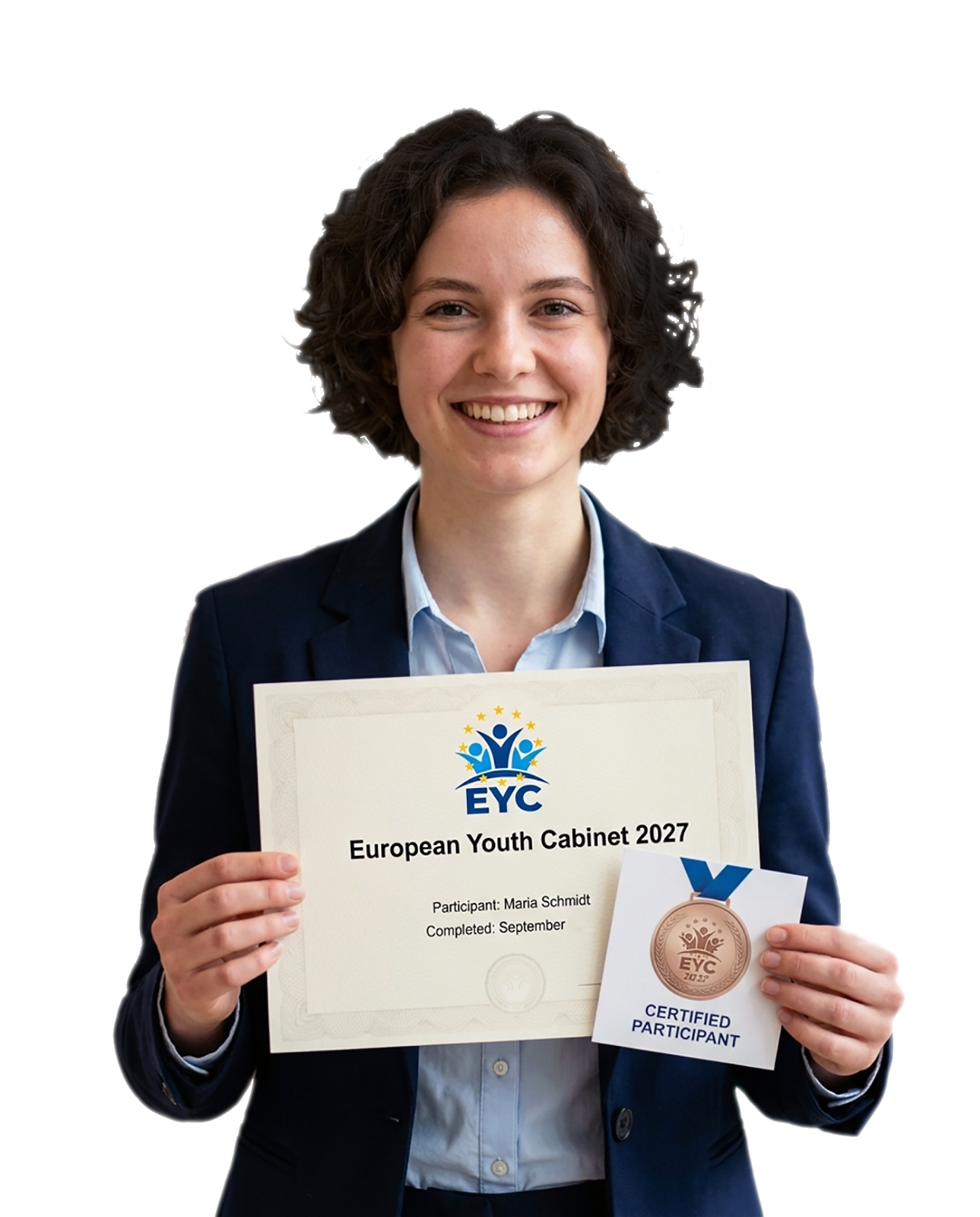
Graduation Ceremony: Every participant receives their personalised certificate for their specific government role.
Detailed Three-Day Agenda
Target Audience & Participation Model
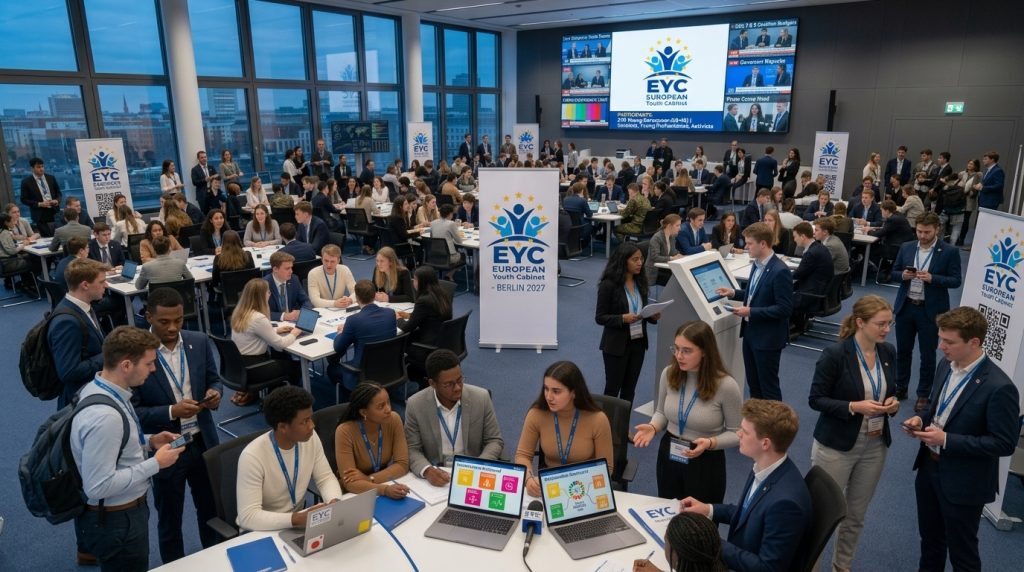
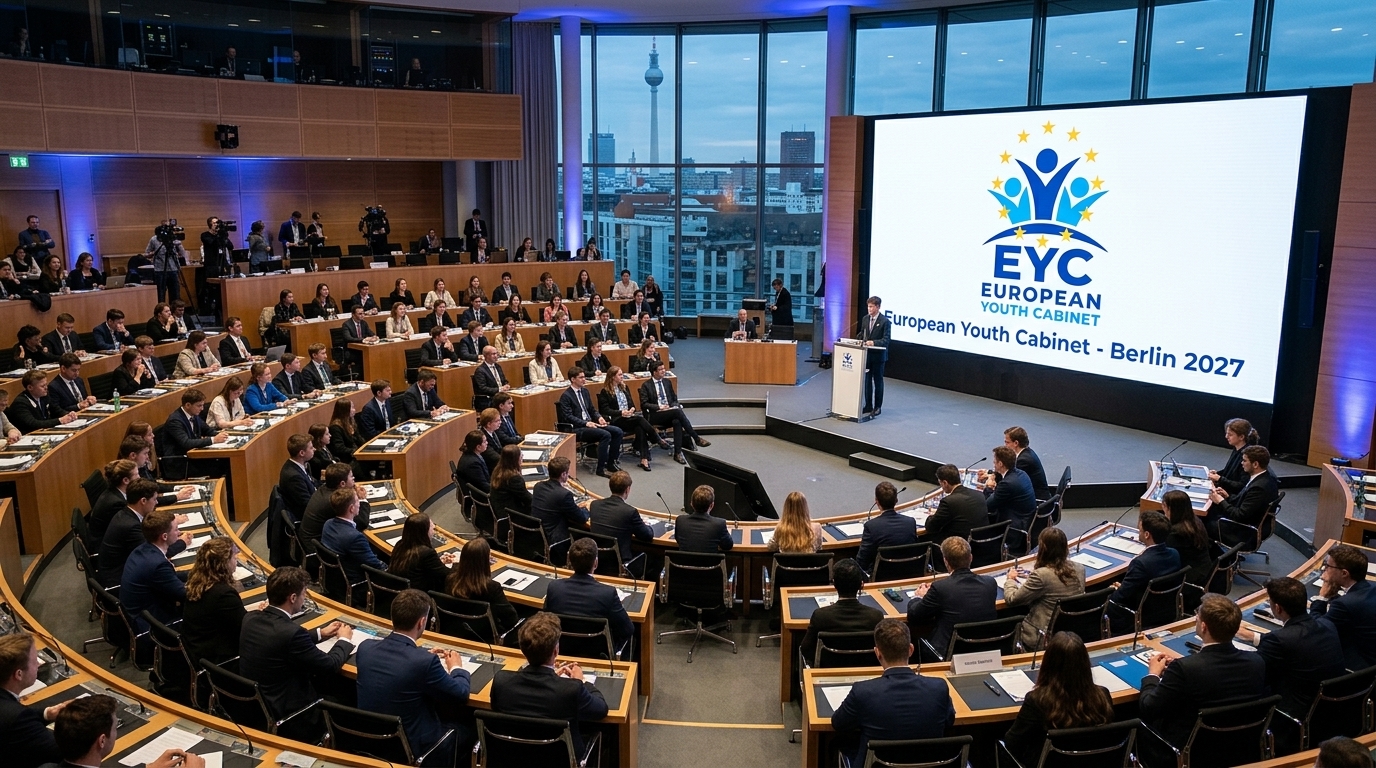
Participants
200 young people (18-35) from across Europe, including students, young professionals, civil society activists, and youth leaders.
The Financial Model
To ensure sustainability and commitment, the EYC operates on a co-investment model. Participants purchase a ticket that covers 3 days and 4 nights of quality accommodation, all meals, simulation materials, media coverage, and the Digital Badge.
Registration Packages
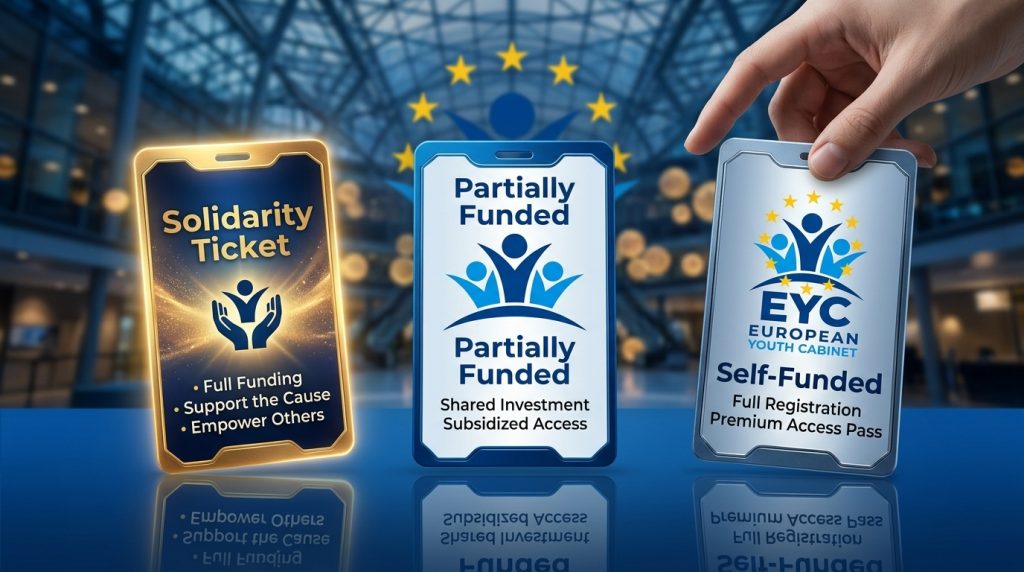
There would be three registration packages: (1) fully funded (Solidarity Tickets), (2) partially funded, and (3) self-funded.
SDGs Alignment & Outcomes
Alignment with European Values
The EYC is fully aligned with the European Union’s Youth Strategy (2019-2027), which emphasises “Engage, Connect, Empower” as the three pillars of youth participation. Every aspect of the program, from the democratic election process to its focus on the SDGs, reflects the core values of the European project: democracy, human rights, solidarity, and sustainability.
Cultivate Crisis-Ready Leadership
We aim to equip 200 young Europeans with the ability to lead under pressure, negotiate across differences, and make difficult decisions with limited resources. By the end of day three, participants will have experienced what it means to govern, not in theory, but in practice.
Strengthen Democratic Participation
The EYC restores faith in democratic processes by making them visible, tangible, and exciting. Through live elections, transparent voting, and real-time accountability (including press conferences with SDG-branded microphones), participants experience democracy as a living, breathing system, not a distant institution.
Bridge Divides Through Collaboration
Young people from different countries, backgrounds, and perspectives will be forced to work together. A minister from Poland must negotiate with a minister from Greece; a vice-president from Germany must build consensus with ministers from Spain and Italy. The EYC turns diversity from a challenge into strength
Produce Tangible Policy Outputs
This is not a talk shop. The EYC will produce a substantive policy document, the Berlin Youth Accord on SDG Implementation, to be presented to European policymakers, the media, and civil society organisations. Participants leave with a legacy, not just a certificate.
Build a European Youth Network
The EYC is the beginning, not the end. Participants will join a growing alumni network of young leaders committed to implementing the SDGs in their home countries, creating a ripple effect that extends far beyond the three days in Berlin.
The European Youth Cabinet at a Glance
The European Youth Cabinet is a bold, entirely original initiative. It bridges the idealism of European democratic values with the hard-earned, practical wisdom of youth who know what it takes to build institutions from scratch. By paying to participate, young Europeans are not buying a ticket to a seminar; they are investing in a transformative, resume-building experience that will equip them to lead with resilience, empathy, and innovation.
Participants learn by doing. They experience the friction of negotiation, the pressure of public accountability, the challenge of resource allocation, and the satisfaction of collaborative problem-solving. By the end of three days, they will not just understand how government works; they will have lived it.
The European Youth Cabinet is a microcosm of the Europe we want to build: democratic, inclusive, forward-thinking, and resilient. And it starts with 200 young people, one shared mission: to govern a sustainable Europe.
Where & When?
Berlin, Germany
First half of 2027
(the exact date to be announced soon)
Pre-Registration & Interest Form
The European Youth Cabinet (EYC) 2027 is on the horizon! Join the Exclusive EYC 2027 Waitlist. Due to high anticipated demand, we are currently building our priority cohort. Secure your spot and help shape the final agenda.
This pre-registration form is your opportunity to express your interest, secure your spot on our priority contact list, and help us shape the future of this program. By sharing your thoughts, suggestions, or even constructive critiques, you will directly influence the design of the EYC experience.
Once official registration opens, we will be the first to contact you via email and WhatsApp with all the details and your personal registration link.
Our Story
NTYCO’s team brings rare expertise: the knowledge to mobilise youth, design participatory governance structures that work, and lead through crisis. The EYC is not an imported model; it is the direct evolution of a methodology tested, refined, and proven in some of the most demanding conditions imaginable.
A Decade of Building Democracy from the Ground Up
The European Youth Cabinet (EYC) is not born from theory; it is forged from over a decade of lived experience in one of the world’s most challenging environments. Founded in 2016, the New Thinker Youth Civil Organisation (NTYCO) has spent more than ten years empowering young people and women through hands-on civic engagement, human rights advocacy, and practical governance training. While many organisations teach democracy from textbooks, NTYCO has practised it under fire, running extensive peace programs and educational initiatives for Afghan girls. Today, we bring this rare, resilience-tested expertise to Berlin, offering European youth a unique bridge between democratic ideals and the hard-earned wisdom of those who have fought to defend them. Learn more… →
The Blueprint: The Afghanistan Youth Government
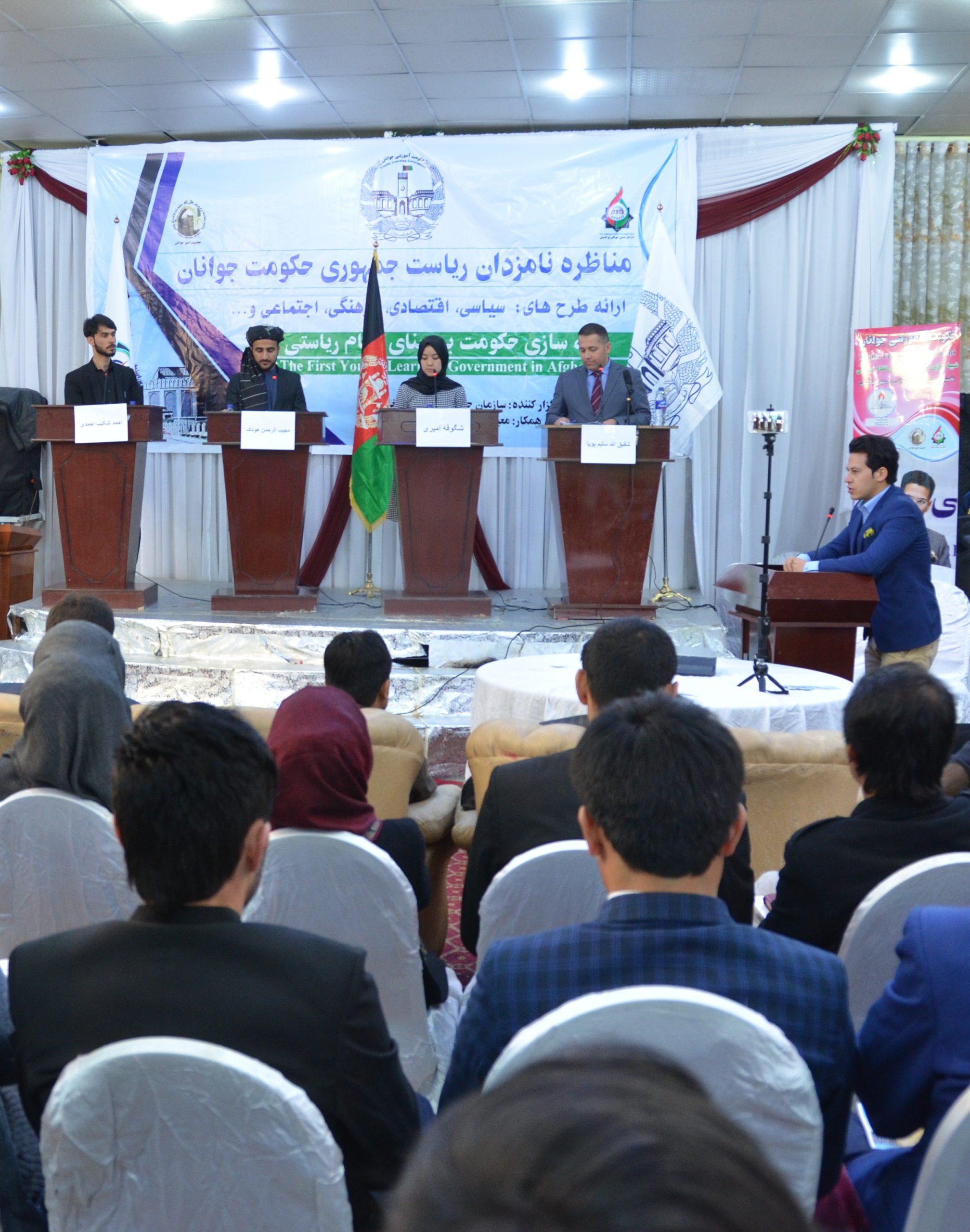
The foundation for the EYC was first proven in 2017 with the groundbreaking “Youth Government” initiative in Kabul. In this pioneering program, 136 young Afghans formed a fully simulated, democratically elected government that operated alongside real state institutions. These young ministers learned to govern, negotiate budgets, and engage in public debates while their country faced war, political instability, and the eventual collapse of the republic. This rigorous, real-world stress test refined a methodology that we have now evolved into the European Youth Cabinet. The EYC is not an imported concept; it is the direct evolution of a model tested, refined, and proven under the most demanding conditions imaginable.
Learn more… →
Call for Partners
Are you a foundation, institution, or corporate partner committed to youth empowerment and the SDGs? We invite you to co-create this transformative experience. Download our Concept Note or contact us at eyc@ntyco.org to explore partnership opportunities.